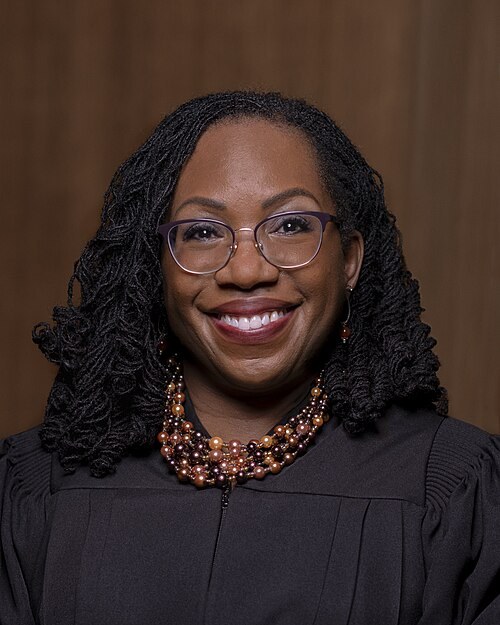
Explore the question, the ruling, and who voted how. These are selected decisions as issued, not a complete voting record or a statement of personal beliefs.
2 decisions
1954 · Constitutional law
Brown v. Board of Education
9–0
Equal protection · Education
The question
Does racial segregation in public schools deny equal protection, even when tangible facilities are comparable?
The outcome
The Court unanimously held that state-imposed racial segregation in public schools violates the Fourteenth Amendment. Separate educational facilities are inherently unequal. Implementation was addressed separately in Brown II (1955).
See the votes & context
Majority (9)
Earl Warren, Hugo L. Black, Stanley F. Reed, Felix Frankfurter, William O. Douglas, Robert H. Jackson, Harold H. Burton, Tom C. Clark, Sherman Minton
Dissent (0)
None
None of the current justices served on the Court in 1954.
Only participating justices are assigned votes. Separate writings and partial joins can differ from the overall judgment.
Did Harvard’s race-conscious admissions program comply with Title VI and equal-protection requirements?
The outcome
The Court held Harvard’s challenged admissions program unlawful. Applicants’ discussions of how race affected their lives may still be considered for individual qualities, but institutions may not recreate the rejected racial preferences indirectly.
Harvard was 6–2 because Jackson did not participate. In the separately decided UNC companion case, the vote was 6–3 and Jackson participated. Jackson’s participation in UNC does not apply to Harvard.
Only participating justices are assigned votes. Separate writings and partial joins can differ from the overall judgment.