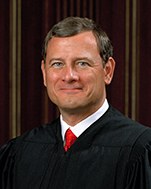
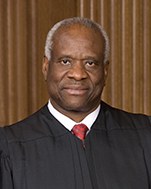
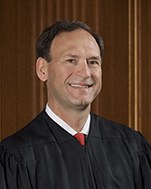
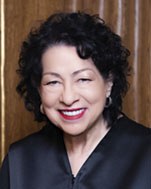
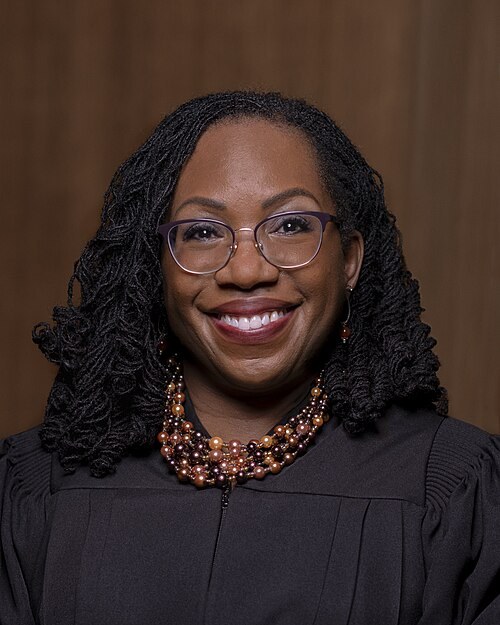
Explore the question, the ruling, and who voted how. These are selected decisions as issued, not a complete voting record or a statement of personal beliefs.
1954 · Constitutional law
Brown v. Board of Education
Equal protection · Education
The question
Does racial segregation in public schools deny equal protection, even when tangible facilities are comparable?
The outcome
The Court unanimously held that state-imposed racial segregation in public schools violates the Fourteenth Amendment. Separate educational facilities are inherently unequal. Implementation was addressed separately in Brown II (1955).
See the votes & context
- Majority (9)
- Earl Warren, Hugo L. Black, Stanley F. Reed, Felix Frankfurter, William O. Douglas, Robert H. Jackson, Harold H. Burton, Tom C. Clark, Sherman Minton
- Dissent (0)
- None
None of the current justices served on the Court in 1954.
Only participating justices are assigned votes. Separate writings and partial joins can differ from the overall judgment.
2015 · Constitutional law
Obergefell v. Hodges
Equal protection · Marriage
The question
Must states license and recognize marriages between two people of the same sex?
The outcome
The Court held that the Fourteenth Amendment requires states to license same-sex marriages and recognize lawful same-sex marriages performed elsewhere.
See the votes & context
- Majority (5)
- Anthony M. Kennedy, Ruth Bader Ginsburg, Stephen G. Breyer, Sonia Sotomayor, Elena Kagan
- Dissent (4)
- John G. Roberts, Jr., Antonin Scalia, Clarence Thomas, Samuel A. Alito, Jr.
Only participating justices are assigned votes. Separate writings and partial joins can differ from the overall judgment.
2020 · Statutory interpretation
Bostock v. Clayton County
Equal protection · Employment
The question
Does Title VII’s ban on discrimination because of sex cover firing someone for being gay or transgender?
The outcome
The Court held that an employer who fires an individual merely for being gay or transgender violates Title VII. This was a statutory interpretation ruling, not a general constitutional ruling on every question involving sex or gender.
See the votes & context
- Majority (6)
- John G. Roberts, Jr., Ruth Bader Ginsburg, Stephen G. Breyer, Sonia Sotomayor, Elena Kagan, Neil M. Gorsuch
- Dissent (3)
- Clarence Thomas, Samuel A. Alito, Jr., Brett M. Kavanaugh
Only participating justices are assigned votes. Separate writings and partial joins can differ from the overall judgment.
2023 · Voting Rights Act
Allen v. Milligan
Voting rights · Equal protection
The question
Was Alabama’s congressional map likely to dilute Black voters’ electoral power in violation of Section 2 of the Voting Rights Act?
The outcome
The Court affirmed the preliminary-injunction ruling against Alabama’s map, applying the established vote-dilution framework under Section 2. The decision concerned the specific record and did not require proportional representation nationwide.
See the votes & context
- Majority (5)
- John G. Roberts, Jr., Sonia Sotomayor, Elena Kagan, Brett M. Kavanaugh, Ketanji Brown Jackson
- Dissent (4)
- Clarence Thomas, Samuel A. Alito, Jr., Neil M. Gorsuch, Amy Coney Barrett
Kavanaugh joined the judgment and the opinion except Part III–B–1. This summary describes the 2023 decision, not later litigation over Alabama’s maps.
Only participating justices are assigned votes. Separate writings and partial joins can differ from the overall judgment.
2023 · Constitutional law
Students for Fair Admissions v. Harvard
Equal protection · Education
The question
Did Harvard’s race-conscious admissions program comply with Title VI and equal-protection requirements?
The outcome
The Court held Harvard’s challenged admissions program unlawful. Applicants’ discussions of how race affected their lives may still be considered for individual qualities, but institutions may not recreate the rejected racial preferences indirectly.
See the votes & context
- Majority (6)
- John G. Roberts, Jr., Clarence Thomas, Samuel A. Alito, Jr., Neil M. Gorsuch, Brett M. Kavanaugh, Amy Coney Barrett
- Dissent (2)
- Sonia Sotomayor, Elena Kagan
- Did not participate
- Ketanji Brown Jackson
Harvard was 6–2 because Jackson did not participate. In the separately decided UNC companion case, the vote was 6–3 and Jackson participated. Jackson’s participation in UNC does not apply to Harvard.
Only participating justices are assigned votes. Separate writings and partial joins can differ from the overall judgment.
2023 · Constitutional law
303 Creative LLC v. Elenis
Free speech · Equal protection
The question
Could Colorado require a designer to create custom expressive wedding websites conveying a message she opposed?
The outcome
The Court held that the First Amendment barred compelling the custom expressive speech at issue. The ruling addressed the stipulated expressive services, not a general exemption from all public-accommodation laws.
See the votes & context
- Majority (6)
- John G. Roberts, Jr., Clarence Thomas, Samuel A. Alito, Jr., Neil M. Gorsuch, Brett M. Kavanaugh, Amy Coney Barrett
- Dissent (3)
- Sonia Sotomayor, Elena Kagan, Ketanji Brown Jackson
Only participating justices are assigned votes. Separate writings and partial joins can differ from the overall judgment.